Empowered Body Pilates Empowered Body Pilates

Why We’re So Drawn to Reformer Pilates

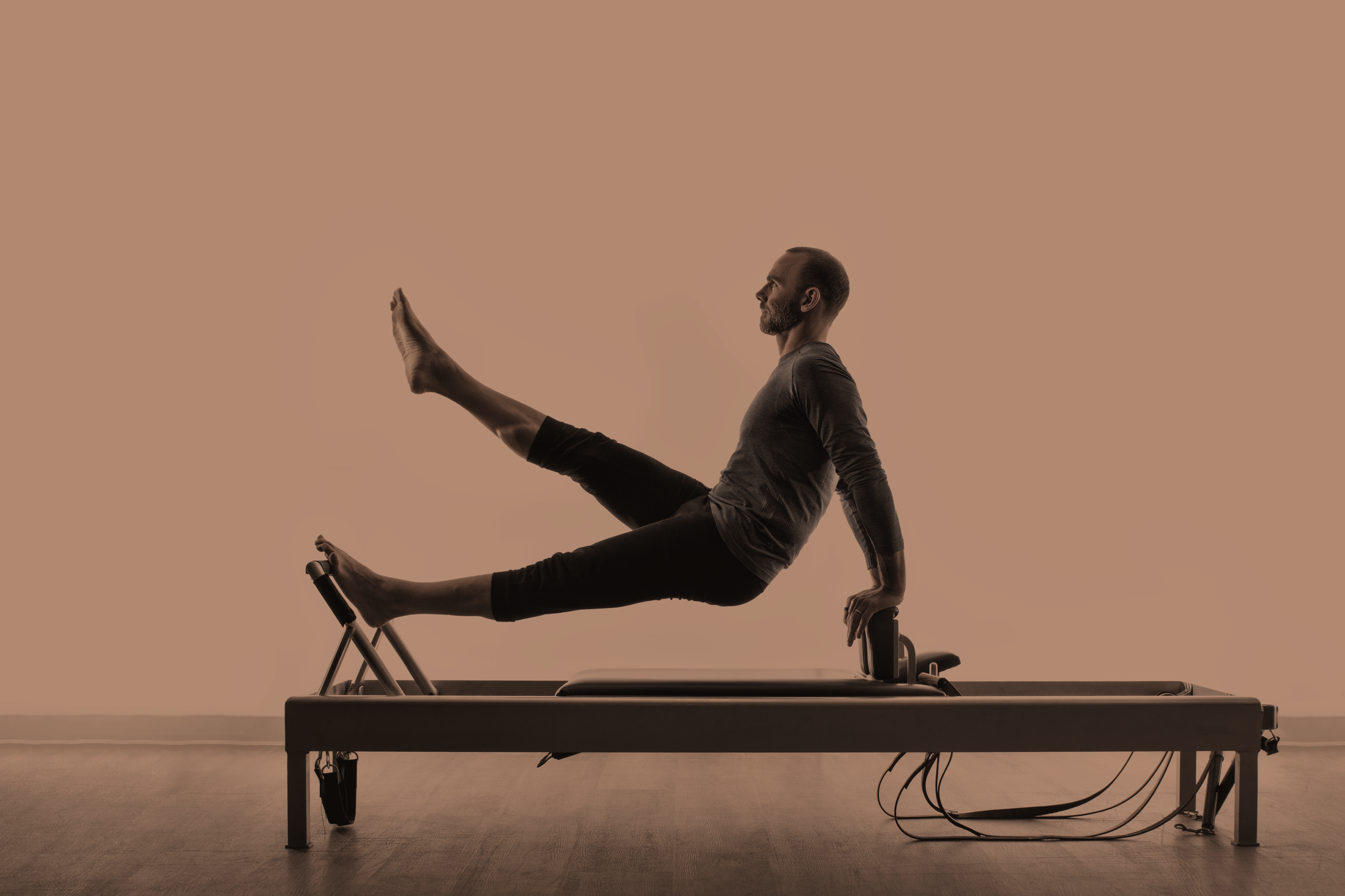
The Reformer has become synonymous with Pilates in today’s fitness culture. Scroll through social media and you’ll see athletes, celebrities, and instructors alike moving through sleek, spring-loaded sequences—often presented as the Pilates experience. Our fascination makes sense. The Reformer can offer structure in a world that often feels chaotic. It supports the body while still asking for effort, creating a framework where movement feels organized, intentional, and achievable. It can challenge even the strongest of individuals.

It’s visually compelling, yes—but more than that, it gives people a way to feel held while doing challenging work. And that combination is hard to resist.

Why the Reformer Is So Effective

I grew up hearing that the Reformer was designed to reform the curves of the spine. Over time, my understanding of that idea has deepened. Today, this is what it means to me:

We often begin with the body lying down, supported by gravity. In this position, the spine has the opportunity to decompress—particularly in areas that hold tension from daily life. Without the constant demand of standing upright, the body can release unnecessary effort and begin to reorganize itself more efficiently. This is why as a beginner, you’ll ALMOST always find yourself on the reformer first. 

The springs are at the heart of what makes the Reformer so compelling.

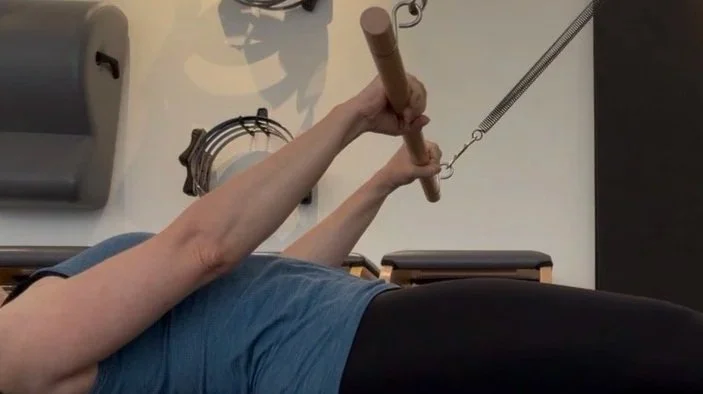
Spring resistance allows us to build strength in a way that feels intelligent rather than aggressive. The heaviness of a spring can help a sleepy muscle come online—offering feedback and direction so the body understands how to work, not just that it should.

The Reformer allows us to develop both eccentric control—how the body lengthens and resists force—and concentric strength—how the body produces force. “Don’t bang my springs! “ This balance supports joint health, coordination, and long-term resilience.

And while the Reformer may appear linear, the work is not. We can move the body through all planes of motion—forward and back, side to side, rotationally—building strength and stability that carry into everyday life.

More Resistance Is Not Better

One of the most common misconceptions about the Reformer is that more tension automatically means a better workout. With so many modern variations of the Reformer—featuring cords, multicolored springs, and endless resistance options—it’s easy to assume that heavier always means harder. In Pilates, that isn’t always true.

Less support often equals more work.

Using fewer springs can increase instability, placing greater demand on the body’s ability to organize, stabilize, and control movement. Instead of overpowering the exercise, the body must respond with precision and awareness. Heavier resistance has an important role—but it is a tool, not a measure of success.

This is part of why the Reformer is so captivating: it can feel both supportive and demanding at the same time.

Why the Reformer Matters to Me

In the classical world, we often begin on the Reformer. It is always the first place I go when I start my own workout—especially when I’m feeling overwhelmed or mentally disorganized.

The support of the Reformer gives me a place to focus inward. Its linear environment provides a clear edge to work against, helping guide the body in motion with intention rather than force. It allows me to find concentration, rhythm, and flow.

It’s where I return when I need to quiet my mind, reconnect to my breath, and re-establish a sense of order in my movement.

That experience is what I want clients to feel—not just stronger, but more grounded, more connected, and more capable in their bodies.

Beyond the Highlight Reel

The Reformer’s popularity is well-earned. It meets the body—and often the mind—with clarity, structure, and possibility. Why we’re drawn to it isn’t a mystery. What matters is understanding where it fits.

Read More
Empowered Body Pilates Empowered Body Pilates

The Practice I Return To

It was only later, through study and sustained practice, that I came to understand Pilates not simply as a useful supplement, but as a fully realized method—one capable of supporting bodies far beyond the ballet studio, across seasons of life and changing movement goals.

Why Classical Pilates Matters : How I got here

I did not come to Pilates through trend, convenience, or curiosity. I came to it through discipline.

My first encounter with Pilates occurred during my years as a dancer with the San Francisco Ballet, where excellence was not optional and longevity was earned. In that environment, Pilates was not framed as a philosophy or a complete system. It was used as a cross-training technique—one that helped balance asymmetries, address repetitive movement patterns, and support the delicate relationship between strength and flexibility required of professional dancers.

What stood out to me immediately was not just that it worked, but how it worked.  Pilates supported strength without sacrificing mobility. It demanded precision, attention, and control—qualities that mirrored the discipline of dance itself. It helped me stay resilient in a physically demanding world, and it earned my trust long before I understood its full depth.

It was only later, through study and sustained practice, that I came to understand Pilates not simply as a useful supplement, but as a fully realized method—one capable of supporting bodies far beyond the ballet studio, across seasons of life and changing movement goals.

Standing on the Shoulders of Teachers

Pilates is not something one invents or personalizes at will. It is something one is entrusted with, and is now my job and life’s work to pass on. 

In 2011, I earned my first Comprehensive Certification through Power Pilates and was promoted to Teacher Trainer shortly thereafter. Teaching teachers is a powerful mirror; it quickly reveals what you truly understand and what you merely perform. During that period, I learned that depth in Pilates is not achieved by adding complexity, but by refining clarity.

That realization led me, in 2018, to step back into the role of student.

Returning to study—especially after years of teaching—requires humility. It also requires respect for lineage. I chose to pursue my second Comprehensive Certification through Alycea Ungaro’s REAL® Pilates program because of its unwavering commitment to Joseph Pilates’ original work and its insistence on precision, structure, and in-depth explorations on session programming. It is through RP that I truly began and admire Mr. Pilates work as a whole . This was not a reinvention of my teaching—it was a deepening.

In 2022, I was honored to be elevated to Lead Trainer for REAL® Pilates. This role carries a responsibility I take seriously: to pass on not just exercises, but a way of thinking. One that values progression, respects the intelligence of the system, and prepares teachers to build sustainable, fulfilling careers within it.

Everything I teach today is shaped by the educators who guided me. I am deeply grateful to them. This work does not exist without lineage, and lineage does not survive without thoughtful stewardship.

What Classical Pilates Actually Is

The word “Pilates” has become broad, diluted and at times downright confusing. While accessibility is necessary and evolution has its place, it should not come at the expense of understanding and reverence to its origin. 

Classical Pilates is not a loose collection of exercises. It is a comprehensive system designed with intention, order, and progression. Each exercise prepares the body for the next. Strength, flexibility, coordination, breath, and control are developed together—not in isolation.

For me, Pilates has always been a catalyst. It supports greater movement goals, whatever those may be in a given season of life. In my twenties, that meant supporting performance. In my thirties, it meant sustaining a demanding teaching schedule. Now, in my early forties—as a mother to a three-year-old, a business owner, and someone who values longevity—it is the practice I return to when I need clarity, focus, and grounding.

Pilates is where my mind and body reconnect. The concentration required in the work creates space: space to think clearly, to reset physically, and to move forward with intention. That mental component is not incidental—it is central to why the method works so well over time.

When taught with integrity, Classical Pilates produces what I often refer to as uniform strength: a balanced, integrated body capable of moving efficiently and sustainably through life. This is why it has endured—not because it is fashionable, but because it is fundamentally sound.


Teaching With Integrity, Living the Work

As the Founder and Owner of Empowered Body Pilates, I am proud to lead the sole host studio in California selected to deliver the REAL® Pilates Classical Certification. This distinction is not about exclusivity—it is about responsibility.

My commitment extends beyond preserving the method itself. I am equally invested in supporting the humans who practice and teach it. Outside the studio, you will often find me in the kitchen cooking for my family—a place where structure, creativity, and nourishment meet. In many ways, cooking mirrors Pilates: it requires attention, respect for process, and an understanding that the best outcomes come from thoughtful preparation rather than shortcuts.

At Empowered Body Pilates, education, mentorship, and professional development are not secondary offerings; they are central to our mission. We believe that when teachers are deeply educated and supported, clients receive something far more meaningful than a workout. They receive a practice that can evolve with them—through injury, motherhood, career changes, and the natural shifts of life.


Why This Blog Exists

This blog is an extension of that belief.

Here, I will share reflections on Classical Pilates as it was intended, explore how it supports modern bodies and real lives, and advocate for thoughtful, lineage-based education in an increasingly crowded industry. My perspective is shaped not only by years of training and teaching, but by lived experience—as a student, a mentor, a business owner, and a mother.

My hope is that these writings feel both informative and welcoming. An invitation to slow down, learn deeply, and engage with Pilates as the intelligent, transformative system it was designed to be. Because Pilates is not simply something I teach.

It is the practice I return to—again and again—when I want to move, think, and live with greater intention.

Read More